

How to Start a Lithium Battery Dealership in India
India's transition toward electric mobility, solar power, advanced inverter backup and large-scale energy storage is changing the battery market. For existing battery retailers, inverter dealers, solar businesses, EV professionals and entrepreneurs, this shift is creating new opportunities beyond conventional lead-acid batteries.
Starting a lithium battery dealership in India can allow a business to serve multiple customer segments—from e-rickshaw owners and homeowners to solar installers, telecom companies, commercial facilities and industrial users.
But a successful dealership is not built simply by purchasing lithium batteries at wholesale prices.
Dealers need the right battery chemistry, application-specific products, dependable technical support, suitable inventory planning, a credible manufacturer and an after-sales system that protects customer confidence.
This guide explains how to start a lithium battery dealership in India, what products dealers should consider, what to check before choosing a manufacturer and how a dealership can build a stronger position in the growing lithium energy market.
How Do You Start a Lithium Battery Dealership in India?
To start a lithium battery dealership, a business should:
- • Study lithium battery demand in its territory
- • Choose target segments such as EV, inverter, solar or commercial storage
- • Partner with an established lithium battery manufacturer
- • Select suitable battery voltage and capacity ranges
- • Understand investment, inventory and working-capital requirements
- • Review product certifications and technical documentation
- • Learn battery, BMS and application fundamentals
- • Establish warranty and after-sales procedures
- • Build relationships with retailers, installers, fleets and commercial buyers
- • Apply through the manufacturer's dealer or distributor programme
The best business model depends on whether you want to operate as a retail dealer, regional distributor, wholesaler, channel partner or OEM/strategic partner.
Why the Lithium Battery Dealership Business Is Expanding
Lithium battery demand is no longer limited to electric vehicles.
LiFePO4 and other lithium-ion battery systems are increasingly considered for energy storage and power-backup applications because they can offer advantages such as high usable capacity, compact construction, integrated Battery Management Systems and lower routine maintenance compared with conventional battery technologies.
For a lithium battery dealer, this creates multiple revenue channels.
Potential customer groups include:
- • E-rickshaw owners and fleet operators
- • EV dealers and service centres
- • Inverter and UPS retailers
- • Residential power-backup customers
- • Solar installers and EPC companies
- • Telecom infrastructure businesses
- • Warehouses and logistics facilities
- • Commercial buildings
- • Industrial establishments
- • Energy-storage project developers
This diversification is particularly important for anyone evaluating a lithium battery business in India, because it reduces dependence on a single application or customer type.
Understand the Lithium Battery Products You Plan to Sell
A professional dealer should understand more than battery price and Ah capacity.
Voltage, chemistry, BMS configuration, communication protocol, load requirement, depth of discharge, charging system and application suitability can all affect product selection.
9AP Energy currently organizes its product portfolio across e-rickshaw batteries, lithium inverter batteries, wall-mounted batteries, telecom lithium batteries, Energy Storage Solutions and Battery Energy Storage Systems.
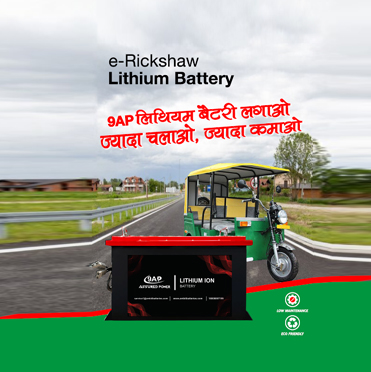
1. E-Rickshaw Lithium Batteries
Electric three-wheelers represent an important market for lithium battery dealers.
9AP Energy's current e-rickshaw range includes:
These configurations allow dealers to address different vehicle platforms, routes, loads and commercial-use requirements.
For a dealer operating near e-rickshaw markets, fleet hubs or commercial transport clusters, this segment can form an important part of a LiFePO4 battery dealership.
The salesperson should still match the battery to the vehicle controller, motor, charger and approved application rather than selling solely on capacity.
2. Lithium Inverter Batteries
Home and commercial backup is another important segment.
9AP Energy currently lists 12V / 110Ah and 24V / 110Ah lithium inverter batteries, giving dealers products for different inverter and backup requirements. Its broader inverter portfolio also extends into higher-voltage wall-mounted solutions.
This segment is especially relevant for:
- • Existing inverter dealers
- • Electrical retailers
- • UPS suppliers
- • Solar installers
- • Home-energy businesses
- • Office backup solution providers
For traditional battery dealers, lithium inverter products can be a practical way to expand beyond tubular and lead-acid battery sales.
3. Wall-Mounted Lithium Batteries
Urban customers increasingly value compact installations.
9AP Energy's website lists wall-mounted battery configurations including:
These products can provide dealers with an additional solution for homes, offices, solar systems and space-conscious installations.
A dealer selling wall-mounted batteries should understand inverter compatibility, load calculations, charging requirements and installation conditions before recommending a system.
4. Telecom Lithium Battery
Telecom is a more specialized B2B market.
9AP Energy's current product portfolio includes a 48V / 100Ah telecom lithium battery, positioning the brand for telecom and infrastructure backup requirements.
Telecom customers typically expect much more than a battery quotation. Reliability, system compatibility, technical documentation, monitoring capability and service response can influence procurement decisions.
For a regional lithium battery distributor, this creates an opportunity to develop B2B sales capabilities alongside retail business.
5. ESS and BESS Solutions
The next level of lithium battery distribution is commercial energy storage.
Energy Storage Systems (ESS) can store electricity for later use, while Battery Energy Storage Systems (BESS) can form part of more advanced commercial, industrial and renewable-energy infrastructure.
Potential applications include:
- • Solar energy storage
- • Commercial backup
- • Industrial power management
- • Peak demand management
- • Renewable-energy integration
- • Warehouses and logistics
- • Critical infrastructure
9AP Energy's industrial positioning includes lithium-based energy systems for operational efficiency, power management and commercial applications.
Dealers entering ESS or BESS should treat the segment as a solution business rather than ordinary counter sales. System sizing, engineering, commissioning and technical support become increasingly important.
Dealer, Distributor or OEM Partner: Which Model Fits You?
Not every lithium battery business needs the same partnership model.
9AP Energy currently describes three channel models on its partnership platform.
Authorized Dealer
This model is more suitable for retailers and service-oriented businesses that want to sell lithium batteries directly to end customers.
A dealer may focus on:
- • Local retail sales
- • Product demonstrations
- • Customer enquiries
- • Basic stock availability
- • Installation coordination
- • Warranty communication
Regional Distributor
A lithium battery distributorship in India generally requires stronger inventory, logistics and market-development capability.
A distributor may supply:
- • Battery retailers
- • Inverter shops
- • Solar companies
- • EV businesses
- • Local dealers
- • Commercial customers
This model can be more suitable for established wholesalers and businesses capable of covering a wider territory.
OEM or Strategic Partner
OEM partnerships are relevant where an EV company, solar manufacturer, equipment producer or industrial customer requires application-specific battery solutions.
9AP Energy's website also states that it supports custom configurations involving voltage, capacity, dimensions, connectors and BMS parameters for specific applications.
This can be particularly useful for businesses seeking something beyond standard dealership stock.
How Much Investment Is Required for a Lithium Battery Dealership?
There is no responsible single figure for lithium battery dealership investment in India.
Investment depends on:
- • Dealer or distributor model
- • Initial inventory quantity
- • Battery voltage and capacities stocked
- • Retail versus wholesale operation
- • Territory size
- • Shop or warehouse cost
- • Logistics requirements
- • Sales and technical staff
- • Demonstration products
- • Local marketing
- • Working capital
- • Service capability
A dealer selling a few inverter battery models has very different requirements from a regional distributor stocking EV batteries, wall-mounted systems and commercial energy-storage products.
Therefore, prospective partners should request an official commercial proposal based on their territory and business model.
What About Lithium Battery Dealership Profit Margin?
Potential dealers frequently search for lithium battery dealership profit margin, but margin should never be evaluated as a percentage alone.
The actual commercial outcome depends on:
- • Product category
- • Purchase volume
- • Stock rotation
- • Freight
- • Local selling price
- • Competition
- • Warranty expenses
- • Marketing cost
- • Credit offered to customers
- • Repeat orders
- • Commercial and fleet business
A slightly higher product margin has limited value if inventory remains unsold or after-sales problems consume time and money.
Experienced distributors therefore evaluate total business economics, not simply the difference between buying and selling price.
How to Choose a Lithium Battery Manufacturer for Dealership
Selecting the right lithium battery manufacturer for dealers is one of the most important decisions in the business.
Before signing a dealership or distributorship agreement, evaluate the following.
Battery Chemistry and Cell Selection
Understand whether the battery chemistry suits the intended application.
LiFePO4 is widely used in mobility and energy-storage applications because of its performance characteristics and thermal stability.
Battery Management System
A modern lithium battery depends heavily on its BMS.
Depending on product design, a Smart BMS can monitor and manage parameters such as:
- • Voltage
- • Current
- • Temperature
- • State of Charge
- • State of Health
- • Cell balancing
- • Overcharge protection
- • Over-discharge protection
- • Short-circuit protection
For dealers, BMS capability is important because it affects diagnostics, application compatibility and after-sales support.
Manufacturing and Quality Control
Ask how battery packs are assembled, tested and traced.
Product quality should be evaluated through technical documentation and the applicable certifications for the specific product and use case—not through marketing claims alone.
Technical and Warranty Support
A dealer should know what happens after the product is sold.
9AP Energy's current partner programme highlights technical assistance, training, marketing assets, logistics and warranty support for channel partners.
These capabilities can be particularly valuable for new dealers moving from conventional batteries into lithium technology.
Lithium Battery Dealership in Delhi and Delhi NCR
Delhi NCR offers a diverse potential market because it combines residential backup demand, commercial establishments, EV activity, e-rickshaw usage, solar businesses and industrial clusters.
A lithium battery dealership in Delhi can potentially serve customers across different applications rather than depending on one battery category.
Businesses can also evaluate demand across:
- • New Delhi
- • Shahdara
- • Noida
- • Ghaziabad
- • Gurugram
- • Faridabad
- • Other Delhi NCR commercial clusters.
How Dealers Can Build a Sustainable Lithium Battery Business
Winning a dealership is only the beginning.
A strong dealer network is built through market development.
Build Multiple Sales Channels
Do not depend only on walk-in customers.
Develop relationships with:
- • EV workshops
- • E-rickshaw dealers
- • Fleet operators
- • Solar installers
- • Inverter dealers
- • Electrical contractors
- • Architects and facility managers
- • Telecom contractors
- • Industrial buyers
Sell Solutions, Not Just Ah and Price
A professional salesperson should first understand:
What equipment will the battery power?
Then evaluate voltage, load, required backup, charging system, installation conditions and application.
This consultative approach builds more trust than simply offering the cheapest battery.
Develop Technical Knowledge
Dealers do not need to become battery engineers, but they should understand basic terms such as:
- • V — Voltage
- • Ah — Ampere-hour capacity
- • kWh — Stored energy
- • BMS — Battery Management System
- • SoC — State of Charge
- • SoH — State of Health
- • DoD — Depth of Discharge
- • Cycle life
- • Series and parallel configuration
- • Charging compatibility
Technical competence is particularly valuable when selling higher-value lithium systems.
Why Consider 9AP Energy for Dealership and Distribution?
9AP Energy, by Ambit Transmission Products Pvt. Ltd., has built a product portfolio that allows channel partners to address several lithium battery markets through one brand.
The current portfolio spans:
- • E-rickshaw lithium batteries
- • Lithium inverter batteries
- • Wall-mounted lithium batteries
- • Telecom lithium batteries
- • Energy Storage Solutions
- • Battery Energy Storage Systems
- • EV mobility applications
- • Industrial energy solutions
The company's current partnership programme also covers Authorized Dealer, Regional Distributor and OEM/Strategic Partner opportunities and lists partner support including training, technical assistance, marketing resources, logistics and warranty support.
For businesses evaluating a lithium battery dealership in India, this broad portfolio can create opportunities to serve retail, mobility, renewable-energy and B2B customers rather than depending on one product category.
Start Your Lithium Battery Dealership Journey With 9AP Energy
If you are an existing battery dealer, inverter retailer, solar company, EV business, wholesaler or entrepreneur looking to enter the lithium battery market, speak with the 9AP Energy team about available dealership and distribution opportunities.
Share your:
- • Business location
- • Existing business profile
- • Target territory
- • Current customer base
- • Preferred battery categories
- • Distribution capabilities
The team can then discuss the appropriate partnership route based on your business requirements and market.
Contact 9AP Energy
Sales: 1800 890 6299
Service: 1800 889 7199
Email: info@9apenergy.com
Support: support@9apenergy.com
Address:
FF-34, First Floor, Plot No. 9B and 9C,
Cross River Mall, CBD Shahdara,
New Delhi - 110032, India
Interested in becoming a dealer or distributor? Connect with 9AP Energy and discuss your market, product requirements and channel partnership opportunity with the team.
Frequently Asked Questions
1. How can I start a lithium battery dealership in India?
Start by studying demand in your territory, selecting target applications such as EV, inverter or solar, and approaching an established manufacturer. Discuss product range, initial stock, commercial requirements, training, warranty support and territory availability before finalizing the dealership.
2. How much investment is required for a lithium battery dealership?
The investment varies according to inventory, product category, dealership level, territory, warehouse or retail infrastructure and working-capital requirements. A retail dealer and a regional lithium battery distributor will usually have different investment structures.
3. Which lithium batteries should a new dealer sell?
The right product mix depends on local demand. Dealers may consider e-rickshaw batteries, lithium inverter batteries and wall-mounted batteries for retail markets, while experienced distributors may also explore telecom batteries, ESS and BESS opportunities.
4. How do I get a lithium battery dealership in Delhi?
Businesses seeking a lithium battery dealership in Delhi should submit their company profile, contact details, territory and product interests to the manufacturer's channel-partner team. The manufacturer can then evaluate partnership availability and commercial requirements.
5. What should I check before choosing a lithium battery manufacturer?
Evaluate battery chemistry, cell quality, BMS capabilities, manufacturing processes, applicable certifications, product range, warranty policy, technical assistance, logistics, after-sales support and the manufacturer's ability to support your target market.
Conclusion
The lithium battery market is evolving from a single-product business into a wider energy ecosystem covering electric mobility, inverter backup, solar power, telecom, commercial storage and industrial applications.
That creates an opportunity for dealers who understand the technology and build the right supplier relationship.
A successful lithium battery dealership in India should therefore be built on three fundamentals: the right products, the right technical support and the right local market strategy.
For dealers and distributors looking to enter or expand in this sector, 9AP Energy offers products across e-rickshaw, inverter, wall-mounted, telecom, ESS and BESS applications, along with dedicated channel partnership options.
Take the next step: Contact 9AP Energy to discuss becoming an authorized dealer, regional distributor or strategic channel partner