

Wall-Mounted Lithium Battery Suppliers in Delhi for Solar and Home Backup
The demand for reliable electricity backup and solar energy storage is increasing across Delhi NCR. Homeowners, housing societies, commercial establishments and solar installation companies are looking for battery systems that offer dependable performance, efficient energy storage and convenient installation. As a result, wall-mounted lithium battery suppliers in Delhi are becoming an important part of the growing residential energy storage market.
Traditional lead-acid inverter batteries have been widely used for home backup. However, advancements in lithium battery technology have introduced more compact and efficient alternatives. Wall-mounted lithium inverter batteries, particularly those using Lithium Iron Phosphate (LiFePO4) technology, offer an attractive solution for applications where space, battery maintenance, charging performance and long-term reliability matter.
9AP Energy, a lithium battery brand of Ambit Transmission Products Pvt. Ltd., offers battery and energy storage solutions for inverter backup, solar applications, electric mobility and industrial requirements. Its product portfolio includes wall-mounted inverter batteries, lithium inverter batteries, Energy Storage Systems (ESS) and Battery Energy Storage Systems (BESS).
This guide explains how wall-mounted lithium batteries work, what specifications buyers should evaluate, how to select the right battery capacity and what to consider when choosing a lithium battery supplier in Delhi.
What Is a Wall-Mounted Lithium Battery?
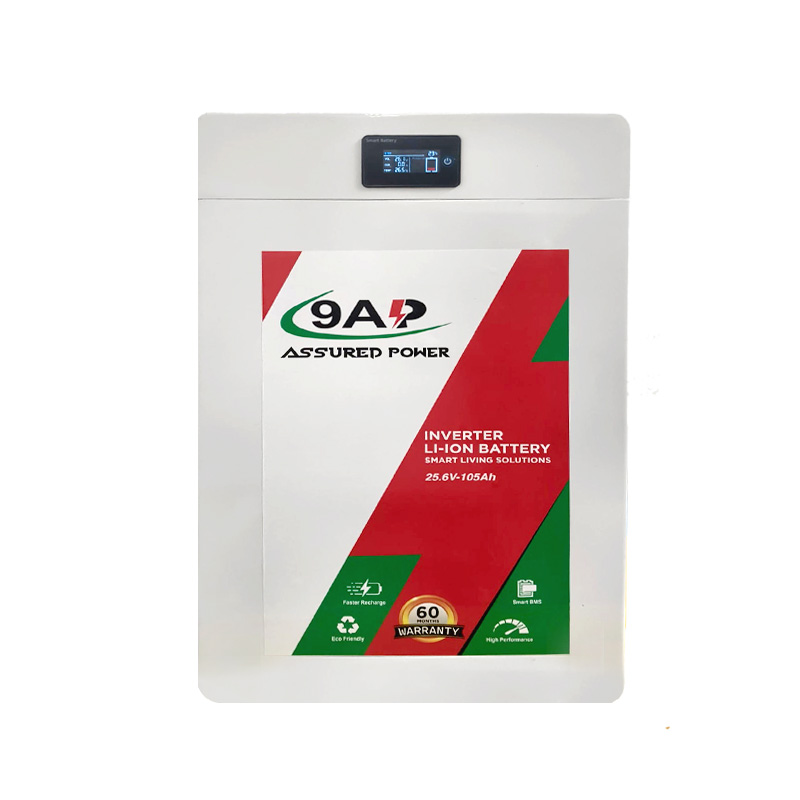

A wall-mounted lithium battery is a rechargeable battery pack designed to be installed on a suitable wall or mounting structure. It stores electrical energy and supplies power through a compatible inverter or energy management system when electricity is required.
Unlike conventional floor-standing inverter batteries, wall-mounted systems are designed to use vertical space. This makes them suitable for modern homes, apartments, offices and other installations where floor space is limited.
Many residential wall-mounted lithium batteries use LiFePO4 (Lithium Iron Phosphate) cells. This battery chemistry is widely used in stationary energy storage because of its thermal stability, cycle-life characteristics and suitability for repeated charging and discharging.
A properly engineered wall-mounted lithium battery may include:
- • Lithium iron phosphate battery cells.
- • Integrated Battery Management System (BMS).
- • Overcharge and over-discharge protection.
- • Overcurrent and short-circuit protection.
- • Temperature monitoring.
- • Cell balancing functionality.
- • Battery status monitoring.
- • Communication interfaces such as CAN or RS485, where supported.
- • Protective battery enclosure and mounting arrangement.
The actual features depend on the battery model and manufacturer specifications.
Why Are Wall-Mounted Lithium Batteries Becoming Popular in Delhi?
Delhi has a growing market for rooftop solar installations, residential inverters and alternative backup power solutions. Homeowners want battery systems that can support essential electrical appliances without requiring large battery storage areas.
Wall-mounted lithium inverter batteries address several of these requirements.
1. Space-Efficient Battery Installation
Space is an important consideration in Delhi apartments, builder floors and independent houses. A wall-mounted inverter battery can help reduce the floor space required for battery installation.
Its compact arrangement can also make the battery area more organized. However, the wall must have adequate load-bearing capacity, and installation should follow the manufacturer's mounting instructions.
2. Better Usable Energy Potential
One important difference between lithium and conventional lead-acid batteries is their usable depth of discharge (DoD).
DoD indicates how much of a battery's rated capacity can be used during a discharge cycle. Lithium battery systems can support a higher usable percentage than many conventional lead-acid applications, depending on the manufacturer's approved operating limits.
This means buyers should compare usable energy in kWh rather than considering only the Ah rating.
3. Intelligent Battery Management System
The Battery Management System is one of the most important components of a modern lithium battery.
It monitors battery operating conditions and helps protect the cells against unsafe charging and discharging conditions.
Depending on its configuration, a smart BMS can provide:
- • Cell voltage monitoring.
- • Temperature monitoring.
- • Overvoltage and undervoltage protection.
- • Overcurrent protection.
- • Short-circuit protection.
- • Cell balancing.
- • Battery status and communication support.
For solar and inverter applications, BMS compatibility with the inverter is particularly important.
4. Reduced Routine Maintenance
LiFePO4 batteries generally require less routine maintenance than flooded lead-acid batteries. They do not require regular electrolyte refilling.
This can make them convenient for homeowners, offices and commercial installations. However, proper installation, periodic inspection and operation within the manufacturer's specified limits are still necessary.
5. Efficient Charging and Solar Energy Utilization
Lithium batteries can offer efficient charging performance when paired with a compatible charging system.
For solar installations, stored electricity can be used during evening hours, low-generation periods or grid interruptions, depending on the system configuration.
9AP Energy: Wall-Mounted Inverter Battery and Lithium Energy Solutions
When searching for wall-mounted lithium battery suppliers in Delhi, buyers should evaluate the manufacturer's product range, engineering capabilities, quality processes and technical support.
9AP Energy, a brand of Ambit Transmission Products Pvt. Ltd., focuses on lithium battery manufacturing and energy storage solutions. With approximately three decades of manufacturing experience at the parent-company level, the brand serves different energy applications.
Its product portfolio includes:
Wall-Mounted Inverter Battery: Designed for space-conscious residential and backup installations where a wall-mounted lithium battery arrangement is preferred.
Lithium Inverter Battery: Designed for compatible inverter applications requiring lithium-based energy storage.
Energy Storage Solution (ESS): Solutions for storing and managing electrical energy across solar, commercial and other energy applications.
Battery Energy Storage System (BESS): Energy storage solutions designed for larger commercial, industrial and infrastructure requirements.
Solar and Renewable Energy Solutions: Battery storage integration for on-grid, off-grid and hybrid solar configurations, subject to system compatibility.
You can explore the company's wall-mounted inverter battery information to understand its product positioning and specifications.
For buyers considering a complete solar storage installation, 9AP Energy's Solar and Renewable Energy Solutions provide further information about energy storage integration and solar applications.
How to Select the Right Wall-Mounted Lithium Battery Capacity
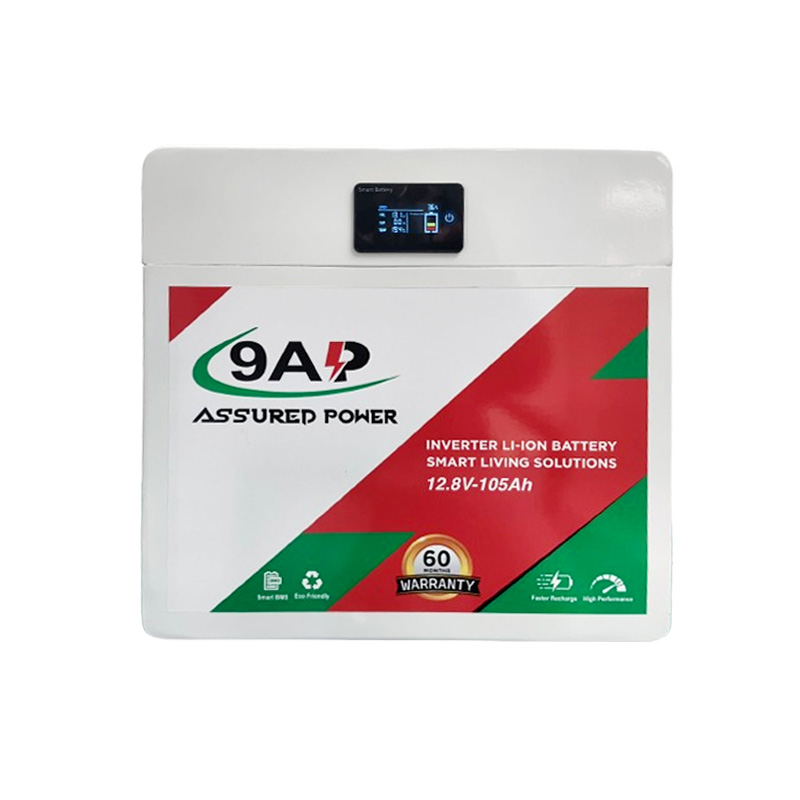
Choosing the correct battery capacity is essential for getting the required backup duration.
A battery that is too small may not support the required appliances for long enough. An unnecessarily large battery can increase the initial investment.
Consider the following factors before selecting a home backup battery.
1. Calculate Your Connected Load
Start by listing the electrical appliances you want to operate during a power cut.
For example:
|
Electrical appliance |
Example power consumption |
|---|---|
|
LED lights |
10W each |
|
Ceiling fan |
50–75W |
|
Wi-Fi router |
10–15W |
|
Television |
80–120W |
|
Refrigerator |
Varies by model and operating cycle |
|
Laptop |
45–90W |
These are illustrative values. Always check the actual appliance labels or manufacturer specifications.
2. Determine Required Backup Time
Multiply the total running load by the required backup hours to estimate energy consumption.
For example:
If your essential appliances consume an average of 400W and you need five hours of backup:
400W × 5 hours = 2,000Wh or 2kWh.
You must then account for inverter losses, battery operating limits and an appropriate energy reserve when selecting the battery.
3. Understand Voltage and Capacity
Battery capacity is commonly expressed in ampere-hours (Ah), while energy capacity is expressed in kilowatt-hours (kWh).
The approximate nominal energy calculation is:
Battery Energy (Wh) = Nominal Voltage (V) × Capacity (Ah)
For example, a 51.2V, 105Ah battery has a nominal energy rating of:
51.2 × 105 = 5,376Wh = 5.376kWh.
This is nominal stored energy, not necessarily the amount of energy available to appliances. Usable energy depends on the permitted DoD, battery configuration and inverter efficiency.
4. Check Inverter Compatibility
Before purchasing a wall-mounted lithium inverter battery, check:
- • Inverter-supported battery voltage.
- • Charging voltage and current requirements.
- • Maximum battery discharge current.
- • Lithium battery charging profile.
- • BMS communication requirements.
- • CAN or RS485 compatibility, if required.
- • Battery configuration supported by the inverter.
A 48V-class and 51.2V battery should not automatically be considered interchangeable. Always verify the manufacturer's compatibility information.
Wall-Mounted Lithium Battery for Solar Energy Storage

A wall-mounted lithium battery can be an important component of a residential solar energy storage system.
During daylight hours, rooftop solar panels generate electricity. The solar inverter manages this electricity and supplies connected loads while directing available surplus energy towards battery charging, depending on the system design.
When solar generation decreases, stored battery energy can support selected electrical loads.
A typical solar battery storage arrangement includes:
- Solar photovoltaic panels.
- Compatible solar or hybrid inverter.
- Lithium battery storage system.
- Battery Management System.
- Electrical protection and isolation equipment.
- Connected household loads.
On-Grid, Off-Grid and Hybrid Solar Applications
On-grid solar systems: These systems operate in coordination with the electricity grid. Battery backup is not automatically available during a grid outage unless the installation includes suitable backup functionality.
Off-grid solar systems: These installations depend on solar generation and battery storage, often with an additional backup energy source where required.
Hybrid solar systems: These systems combine grid connectivity, solar generation and battery storage. Their operating modes depend on inverter capabilities and system configuration.
9AP Energy's Energy Storage Solutions are relevant to customers evaluating battery integration with renewable energy systems.
Wall-Mounted Lithium Battery vs Traditional Lead-Acid Battery
Understanding the differences between battery technologies can help buyers make a better purchasing decision.
|
Comparison factor |
Wall-mounted LiFePO4 battery |
Traditional lead-acid battery |
|---|---|---|
|
Installation |
Wall-mounted design, where supported |
Generally floor-standing |
|
Maintenance |
Lower routine maintenance |
Some types require water maintenance |
|
Usable capacity |
Generally higher permitted DoD |
Generally lower recommended DoD |
|
Charging |
Can support faster charging when designed for it |
Typically slower |
|
Battery management |
Integrated BMS in modern lithium systems |
Varies by battery type |
|
Weight and size |
Often more compact for comparable usable energy |
Often bulkier |
|
Initial investment |
Generally higher |
Generally lower |
The actual cost advantage depends on purchase price, usable energy, cycle life, electricity usage, replacement frequency and warranty.
For a long-term comparison, customers should evaluate total cost of ownership rather than selecting a battery based only on its initial price.
What to Check Before Choosing Lithium Battery Suppliers in Delhi
Selecting a reliable supplier is just as important as choosing the correct battery.
Whether you are a homeowner, solar EPC company, electrical contractor, dealer or distributor, evaluate these factors before placing an order.
1. Manufacturing and Engineering Experience
Check the manufacturer's experience in lithium battery pack design, assembly, testing and application-specific solutions.
2. Genuine Technical Specifications
Request a datasheet showing nominal voltage, rated capacity, energy rating, charging limits, discharge current and battery dimensions.
3. Battery Safety Features
Understand the BMS protection functions, cell configuration, enclosure protection and applicable product testing documentation.
4. Solar and Inverter Compatibility
Confirm compatibility with the exact inverter model and its charging requirements.
5. Warranty and Service Support
Review warranty duration, cycle-related conditions, exclusions and the process for technical assistance.
6. Bulk Supply and OEM Capabilities
Solar installers, distributors and commercial buyers should also evaluate supply capacity, customization options and after-sales support.
9AP Energy provides dedicated information for customers interested in its products and manufacturing capabilities.
Frequently Asked Questions
1. Who are the wall-mounted lithium battery suppliers in Delhi?
When selecting a supplier, compare product specifications, manufacturing capabilities, battery safety features, warranty and technical support. 9AP Energy, a brand of Ambit Transmission Products Pvt. Ltd., offers wall-mounted inverter battery and other lithium energy solutions. Contact its team for current product availability and quotations.
2. What is the price of a wall-mounted lithium battery in Delhi?
The price depends on voltage, Ah capacity, usable kWh, battery chemistry, BMS features, enclosure design and warranty. Request a product-specific quotation after confirming your backup requirements.
3. Which lithium battery is suitable for home solar backup?
LiFePO4 batteries are widely used for residential energy storage because of their thermal stability and cycle-life characteristics. The correct battery depends on solar generation, inverter compatibility, required backup duration and household electricity consumption.
4. Can a wall-mounted lithium battery work with an existing inverter?
Yes, if the battery voltage, charging parameters, discharge limits and communication requirements are compatible with the inverter. Confirm compatibility with the battery and inverter manufacturers before installation.
5. How do I calculate the battery capacity required for my home?
Calculate the combined power consumption of the appliances you want to operate and multiply it by the required backup duration. Then account for battery usable capacity and inverter efficiency to determine the appropriate battery size.
Conclusion: Choose the Right Wall-Mounted Lithium Battery Supplier in Delhi
A wall-mounted lithium battery can be a practical solution for homeowners and businesses looking for compact energy storage, reduced routine maintenance and dependable backup power.
However, selecting the right battery requires more than comparing prices. Voltage compatibility, usable capacity, battery chemistry, BMS protection, charging requirements and warranty conditions should all be evaluated before purchasing.
If you are searching for wall-mounted lithium battery suppliers in Delhi for solar and home backup, connect with 9AP Energy to discuss your requirements.
With its range of wall-mounted inverter batteries, lithium inverter batteries, ESS and BESS solutions, 9AP Energy serves customers looking for application-oriented lithium battery and energy storage solutions.
Contact 9AP Energy for Lithium Battery Enquiries
Company: 9AP Energy – Ambit Transmission Products Pvt. Ltd.
Sales: 1800 890 6299
Service: 1800 889 7199
Email: support@9apenergy.com | info@9apenergy.com
Address: FF-34, First Floor, Plot No. 9B and 9C, Cross River Mall, CBD Shahdara, New Delhi – 110032, India.
Website: https://9apenergy.com/
Contact the team to discuss wall-mounted lithium battery availability, home backup requirements, solar energy storage, product specifications and bulk enquiries.
Choose a battery solution based on your actual energy requirements and power your home with smarter energy storage from 9AP Energy