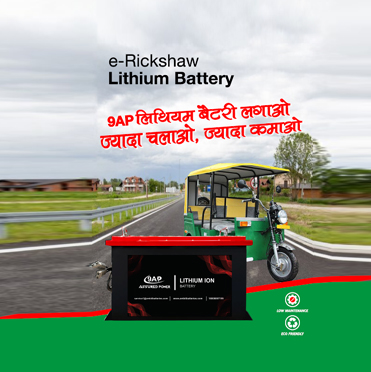


How to choose the right Lithium Battery for your Solar System
Are you planning to go solar or upgrade your existing solar setup — but confused about which battery to pick?
You're not alone. Choosing the right lithium battery for your solar system is one of the most critical — and misunderstood — decisions in renewable energy. The wrong choice can cost you thousands of rupees and years of frustration. The right one powers your home reliably for a decade or more.
In this guide, we break down everything you need to know: capacity, voltage, chemistry, BMS features, and real-world advice from India's trusted lithium battery manufacturer — 9AP Energy (Assured Power).
1. Why Lithium Batteries Are the Best Choice for Solar Systems
Solar panels generate power during the day — but what happens at night or during cloudy weather? That's where your solar battery storage system steps in.
Lithium batteries have rapidly replaced older lead-acid batteries as the go-to solution for solar energy storage in India. Here's why:
- • Longer lifespan — 3,000 to 5,000+ charge cycles vs. 300–500 for lead-acid
- • Higher energy efficiency — 95–98% round-trip efficiency vs. 70–80%
- • Faster charging — Fully charges in 2–4 hours
- • Lighter and compact — Up to 60% lighter than equivalent lead-acid batteries
- • Zero maintenance — No water topping, no corrosion checks
- • Smart monitoring — Built-in BMS with Bluetooth connectivity
- • Safer — Advanced fire protection and thermal management
For homes, businesses, and off-grid setups across Delhi and India, lithium batteries are now the clear choice for solar battery backup.
2. Key Factors to Consider When Choosing a Solar Lithium Battery
Before you spend a rupee, understand these essential selection criteria:
- • Energy capacity (Ah and kWh) — How much power can it store?
- • Voltage compatibility — Does it match your inverter and solar charge controller?
- • Battery chemistry — LiFePO4 or NMC?
- • Battery Management System (BMS) — Smart, dumb, or none?
- • Depth of Discharge — How much of the battery can you actually use?
- • Cycle life — How many charge-discharge cycles before capacity degrades?
- • Safety certifications — Is it fire-safe, overcharge-protected?
- • Warranty — What does the manufacturer guarantee?
- • After-sales support — Is technical support accessible locally?
Getting these factors right ensures you invest in a battery that performs for years — not just months.
3. Understanding Battery Capacity (Ah & kWh)
Battery capacity tells you how much energy the battery can store and deliver.
Ampere-hour (Ah) tells you how much current a battery can provide over time. A 105Ah battery at 12V stores approximately 1.26 kWh of usable energy (at full DoD).
kWh (kilowatt-hour) is the more practical unit. A typical Indian household uses 4–8 kWh per day. For backup of essential appliances (fans, lights, router, TV), a 2–3 kWh battery is often sufficient.
How to calculate what you need:
Daily energy requirement (Wh) ÷ Battery Voltage (V) = Required Ah
Example: If you need 1,200Wh backup at 12V: → 1,200 ÷ 12 = 100Ah minimum
9AP Energy's 12.8V 105Ah and 25.6V 105Ah Inverter Lithium Batteries are designed precisely for this range — making them ideal for most Indian homes.
4. Voltage Selection: 12V vs. 24V vs. 48V
Voltage must match your solar inverter and charge controller. Here's a quick guide:
| System Size |
Recommended Voltage |
|---|---|
| Small home / basic backup | 12V |
| Medium home / 1–3 kW solar | 24V |
| Large home / 3–10 kW solar | 48V |
- 12V systems are simpler and cheaper to set up. Great for basic home backup.
- 24V systems like 9AP's 25.6V 105Ah battery offer better efficiency, lower wire losses, and suit mid-range solar setups perfectly.
- 48V systems are ideal for larger off-grid installations or commercial use.
Always confirm your inverter's input voltage range before buying a battery.
5. Battery Chemistry: LiFePO4 vs. NMC
Two lithium chemistries dominate the solar storage market:
LiFePO4 (Lithium Iron Phosphate)
- • Most stable and safest lithium chemistry
- • Longer cycle life (3,000–5,000+ cycles)
- • Slightly lower energy density but extremely fire-resistant
- • Best choice for home solar storage
NMC (Nickel Manganese Cobalt)
- • Higher energy density (more power in less space)
- • Slightly higher cost
- • Used in premium EV batteries and high-performance storage
For home solar systems in India, LiFePO4 is strongly recommended due to its safety, longevity, and performance in high-temperature conditions — especially relevant in cities like Delhi, where summers push temperatures to 45°C+.
9AP Energy's Inverter Lithium Batteries use advanced Li-ion cell technology with Smart BMS and fire protection, engineered for Indian climatic conditions.
6. Why BMS (Battery Management System) Matters
The Battery Management System (BMS) is the brain of your lithium battery. Never buy a lithium solar battery without a quality BMS.
A good BMS protects your battery from:
- • Overcharging — Prevents damage from excessive solar input
- • Over-discharging — Protects battery life when charge drops too low
- • Short circuits — Immediately cuts power on dangerous current surges
- • Overheating — Shuts down cells before thermal runaway occurs
- • Cell imbalance — Equalizes voltage across all cells for uniform performance
9AP Energy's batteries feature a Smart BMS with Bluetooth connectivity, letting you monitor your battery's state of charge, voltage, temperature, and health directly from your smartphone. This is a major advantage for solar users who want real-time visibility into their energy storage.
7. Depth of Discharge (DoD) and Cycle Life Explained
Depth of Discharge (DoD) is the percentage of a battery's capacity you can safely use before recharging.
- • Lead-acid batteries: max 50% DoD (use only half the rated capacity)
- • Lithium batteries: 80–100% DoD (use nearly full capacity)
This means a 100Ah lithium battery gives you ~80–100Ah of usable energy, while a 100Ah lead-acid battery gives only ~50Ah. Lithium gives you 2x the usable energy for the same rated capacity.
Cycle Life refers to how many complete charge-discharge cycles a battery can handle before dropping to 80% of original capacity. 9AP Energy's lithium batteries deliver 3,000+ cycles — that's roughly 8–10 years of daily use.
8. Solar Battery Safety Features You Must Look For
Safety is non-negotiable when selecting a solar battery for your home. Look for:
- • Fire protection — Integrated thermal management and fire-resistant casing
- • Overcharge and over-discharge protection via BMS
- • Short-circuit protection
- • Low battery alert — Notifies you before complete discharge
- • IP rating for dust and moisture resistance (if outdoor installation)
- • CE, UL, or BIS certification
9AP Energy's Wall Mounted Inverter Lithium Batteries feature built-in fire protection, low battery alerts, and a Smart BMS — providing multiple layers of safety for your home.
9. Lithium Battery vs. Lead-Acid Battery for Solar — Comparison Table
| Feature | Lithium Battery | Lead-Acid Battery |
|---|---|---|
| Cycle Life | 3,000–5,000+ cycles | 300–500 cycles |
| Usable Capacity (DoD) | 80–100% | 50% |
| Round-Trip Efficiency | 95–98% | 70–80% |
| Weight | 60% lighter | Heavy |
| Maintenance | Zero | Regular (water, terminals) |
| Charge Speed | Fast (2–4 hrs) | Slow (8–16 hrs) |
| Lifespan | 8–15 years | 2–5 years |
| Smart Monitoring | Yes (BMS + Bluetooth) | No |
| Safety | High (fire-protected) | Risk of acid leaks |
| Environmental Impact | Low | High (lead toxicity) |
| Cost (Long-Term) | Lower | Higher |
Verdict: Though lithium batteries have a higher upfront cost, their long-term value is significantly better — making them the smarter investment for any solar system.
10. How to Calculate the Right Battery Size for Your Home
Follow these four steps to size your solar battery correctly:
Step 1: List your critical appliances and their wattage
| Appliance | Wattage | Hours/Day | Daily Wh |
|---|---|---|---|
| Ceiling Fan (3) | 75W each = 225W | 8 hrs | 1,800 Wh |
| LED Lights (10) | 10W each = 100W | 6 hrs | 600 Wh |
| LED TV | 80W | 4 hrs | 320 Wh |
| Wi-Fi Router | 15W | 24 hrs | 360 Wh |
| Total | 3,080 Wh/day |
Step 2: Add 20% buffer → 3,080 × 1.2 = 3,696 Wh
Step 3: Divide by voltage → 3,696 ÷ 24V = 154Ah
Step 4: Account for DoD → 154 ÷ 0.9 = ~170Ah required (use two 105Ah batteries in parallel)
For most average Indian homes, two 9AP 12.8V 105Ah or one 25.6V 105Ah battery provides excellent solar backup for essential appliances.
Need a customized calculation? Contact 9AP Energy's experts — we'll design the right system for your home.
11. Top Use Cases: From Home Backup to Off-Grid Solar
9AP Energy's Inverter Lithium Batteries are ideal for:
Residential Solar Backup (Delhi & NCR) Power your lights, fans, router, and TV through power cuts and nighttime. Wall-mounted design saves floor space.
Off-Grid Solar Homes Remote homes, farmhouses, and rural properties that need reliable, maintenance-free energy storage.
Small Business Backup Shops, offices, and clinics that cannot afford downtime during power outages.
Solar Rooftop Systems Pair with your rooftop solar panels for maximum self-consumption and grid independence.
3-Wheeler & Light Electric Vehicles 9AP also offers specialized lithium batteries for electric vehicles — check our 3-Wheeler Brochure for details.
12. Why 9AP Energy Lithium Batteries Are Ideal for Solar Systems in India
9AP Energy (Assured Power) brings 30+ years of legacy in the power sector. Our Inverter Lithium Batteries are specifically engineered for Indian conditions:
Product Highlights:
- • Models: 12.8V 105Ah | 25.6V 105Ah (Wall Mounted)
- • Smart BMS — Protects against overcharge, over-discharge, short circuit
- • Bluetooth Connectivity — Monitor via smartphone app
- • Low Battery Alert — Stay informed before power runs out
- • Fire Protected — Multiple safety layers for home safety
- • 60-Month Warranty — One of the best warranty terms in India
- • Wall Mounted Design — Space-saving, aesthetic, easy to install
- • Zero Maintenance — Set it and forget it
Our lithium batteries are compatible with most leading inverter brands available in India, making them a plug-and-play upgrade for your existing setup.
13. FAQs: Choosing a Lithium Battery for Solar System
Q1. Which lithium battery is best for a solar system in India?
For home solar systems, LiFePO4-based lithium batteries are the best choice due to their safety, long cycle life (3,000+ cycles), and performance in high-temperature Indian climates. 9AP Energy's 12.8V or 25.6V 105Ah Inverter Lithium Batteries are among the top options in India, offering Smart BMS, Bluetooth monitoring, 60-month warranty, and fire protection.
Q2. How do I know what size lithium battery I need for my solar system?
Calculate your daily energy consumption in Watt-hours (Wh), add a 20% buffer, divide by your system voltage to get Ah, and then adjust for Depth of Discharge (typically 90% for lithium). For most Indian homes needing 2–4 kWh/day backup, a 105Ah battery at 12.8V or 25.6V is the ideal starting point.
Q3. Can I use 9AP's lithium battery with my existing solar inverter?
Yes — in most cases. 9AP Inverter Lithium Batteries are compatible with leading inverter brands. However, it's important to verify your inverter's lithium battery compatibility setting (Li-ion mode). Contact our technical team for free compatibility verification at 📞 1800 890 6299
Q4. What is the lifespan of a lithium battery in a solar system?
A quality lithium battery used in a solar system typically lasts 8–15 years, offering 3,000 to 5,000+ charge cycles. 9AP Energy provides a 60-month (5-year) warranty, reflecting our confidence in the battery's durability. Proper installation and avoiding extreme temperatures will maximize lifespan.
Q5. Is a lithium battery safer than a lead-acid battery for home solar use?
Absolutely. Lithium batteries — especially those with Smart BMS — have multiple built-in safety protections including overcharge protection, thermal management, short-circuit cutoff, and fire protection. Lead-acid batteries carry risks of acid leaks, hydrogen gas emission, and corrosion. 9AP's lithium batteries are fire-protected and include a low battery alert, making them significantly safer for indoor home installations.
Q6. What is the price of a lithium battery for a solar system in India?
Lithium solar battery prices in India vary by capacity and brand, typically ranging from ₹15,000 to ₹80,000+. For the best value with warranty and smart features, contact 9AP Energy for a customized quote based on your solar system requirements.
Q7. Can lithium solar batteries be installed indoors or wall-mounted?
Yes! 9AP Energy's Wall Mounted Inverter Lithium Batteries are designed for indoor installation — saving floor space while providing a modern, sleek look. They're ideal for apartments, small homes, and offices where space is at a premium.
14. Conclusion: Make the Smart Choice for Your Solar System
Choosing the right lithium battery for your solar system isn't just about picking the cheapest option — it's about finding the best value, safety, performance, and longevity for your specific needs.
To summarize the key takeaways:
- • Go with lithium over lead-acid — longer life, more usable capacity, zero maintenance
- • Choose LiFePO4 chemistry for home solar safety and durability
- • Always ensure a quality BMS — it's the battery's protection system
- • Size your battery correctly — calculate Ah based on your daily energy needs
- • Opt for a trusted brand with warranty and local support
9AP Energy (Assured Power) has been empowering Indian homes with reliable power solutions for over 30 years. Our Inverter Lithium Batteries with Smart BMS, Bluetooth monitoring, fire protection, and 60-month warranty are built for Indian homes, Indian weather, and Indian budgets.
📞 Ready to Power Your Home with Solar? Contact 9AP Energy Today!
Our team of solar battery experts is available to help you choose the right system, calculate the ideal battery size, and provide professional installation guidance.
📧 Email: support@9apenergy.com | info@9apenergy.com
📞 Toll-Free: 1800 890 6299 | 1800 889 7199
📍 Address: FF-34, First Floor, Plot No. 9B and 9C, Cross River Mall, CBD Shahdara, New Delhi - 110032, India
🌐 Website: www.9apenergy.com
Get a FREE solar battery consultation today — call us or walk into our Delhi showroom!
Disclaimer: Battery performance figures are typical values and may vary based on usage conditions, temperature, and installation quality. Consult our technical team for site-specific recommendations.